Songs for soft-hearted people living through hard times.
Erik Bleich writes songs that live in between, a kind of Liminal Americana that never settles in one place for long.
A Toronto-based singer-songwriter raised in the isolated mill town of Dryden, Ontario, his work is grounded in a plainspoken, conversational voice, his guitar at the center, with arrangements that expand and shift around it. After years spent trying to keep pace with the outside world, his music moves differently, creating space to slow down, to sit inside a feeling a little longer, to let something surface without forcing it.
His songs often circle what goes unnoticed, the quiet patterns beneath ordinary life, the feeling of something just out of frame.
His latest album, Sumac, traces the moment when those patterns come into focus. Written through years of chronic pain and an uneven recovery following a life-altering car accident, alongside a late diagnosis of neurodivergence, the record holds both the grief and relief of finally naming what was always there. It opens at a crossroads and moves toward something harder to name, not quite resolution, but recognition.
At its core is a quiet tension between closeness and distance, between being seen and learning how to disappear. As Bleich sings on A Place To Hide, “Don’t want to feel like I need to deceive you / to be who I need.”
The album is grounded in the textures of his adopted home of Toronto, High Park in early spring, the Leslie Street Spit at dusk, the silhouette of the city against the water. He carries the distance of Northern Ontario into the work, songs that take root in overlooked places while reaching toward something larger than place itself.
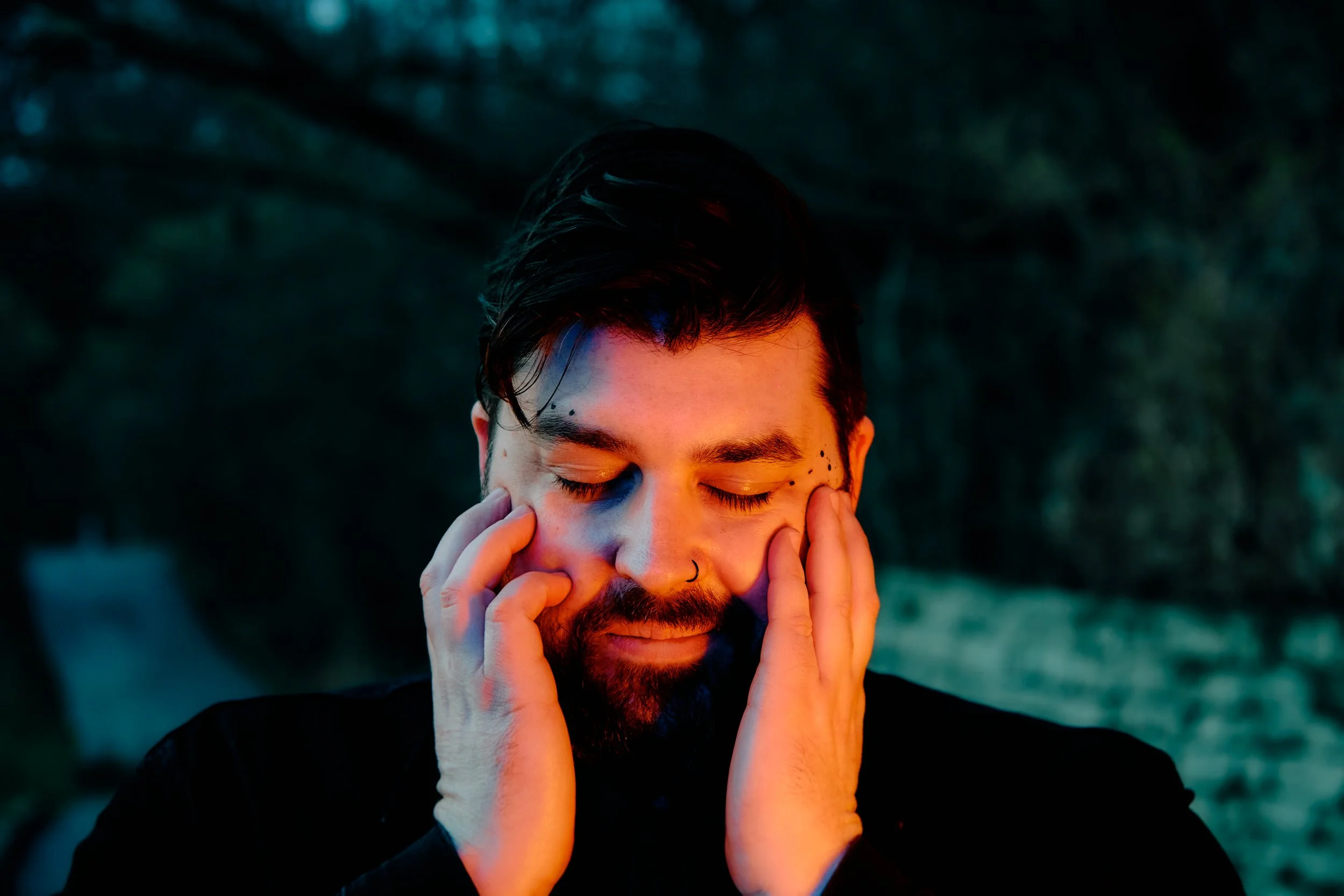
Sonically, Sumac moves between hushed intimacy and more expansive arrangements built on lush, reverberant guitars, cinematic strings, and a rhythm section that leaves room to breathe. Songs begin in a conversational tone and open outward, a kind of Liminal Americana that resists settling in one place, sitting somewhere near Sufjan Stevens, John K. Samson, and Big Thief. Expansive in arrangement but intimate in writing, the music holds to a simple principle, three chords and the honest truth, carried through shifting textures and changing light.
A quiet but consistent presence in Toronto’s folk and songwriter community since 2010, His work has been featured on CBC Radio’s Q, community and campus radio across the country, and the occasional “Indie Chill” playlist in your local coffee shop. He has contributed guest vocals to the 2026 JUNO-nominated Young Novelists record These Dark Canyons, and worked as a side player with Peter Graham, Melanie Brûlée, Shawn William Clarke and David Newberry.